

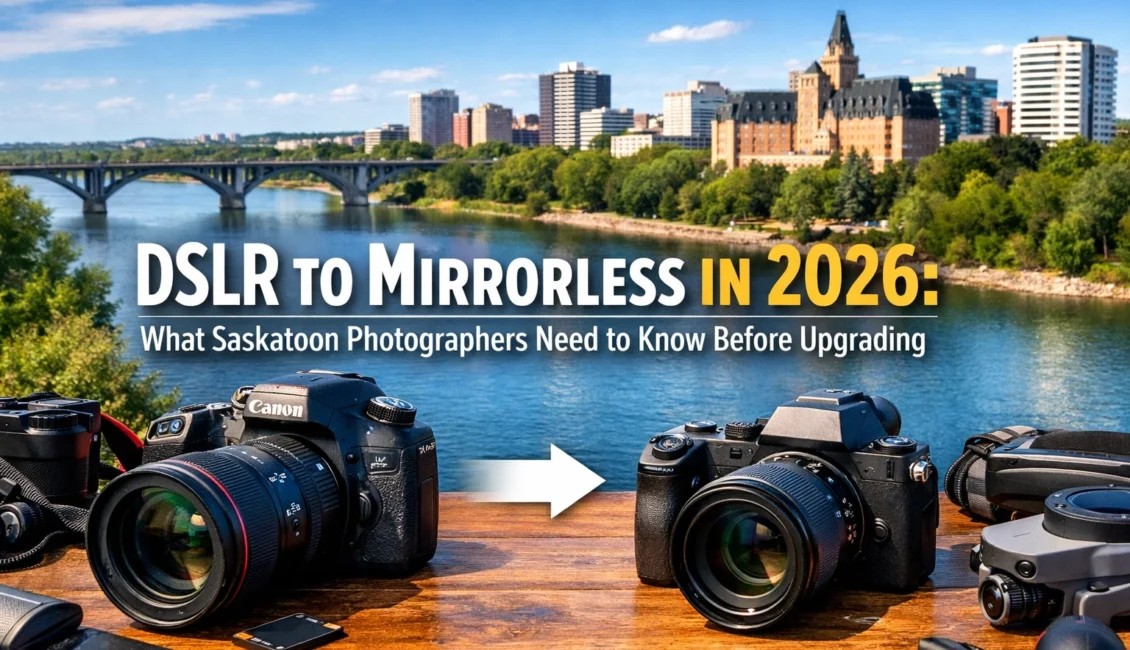
Hey there, Saskatoon photographers! It’s February 2026, and if you’ve been holding onto your trusty DSLR like it’s a family heirloom, we totally get it. There’s something tactile and reliable about that mirror slap, isn’t there? But as we look at the current photography landscape, the "Mirrorless Revolution" isn't a revolution anymore: it’s just the way things are.
Whether you’re shooting the northern lights over the South Saskatchewan River or capturing the action at a Huskies game, you’ve probably noticed more and more of your peers carrying smaller, quieter cameras. If you’ve been on the fence about making the jump, this guide is for you. We’re going to break down what the 2026 market looks like, how to make the transition without breaking the bank, and why Saskatoon is actually a great place to be a mirrorless shooter right now.
The State of Gear in 2026
To put it bluntly: The DSLR era has officially transitioned into the "Legacy" era. By now, major manufacturers like Canon, Nikon, and Sony have almost entirely ceased production of new DSLR bodies and EF/F-mount lenses. While your current gear still takes amazing photos, the innovation is happening elsewhere.
In 2026, mirrorless technology has matured to the point where the early "quirks" (like short battery life and laggy electronic viewfinders) are a thing of the past. Today’s mirrorless cameras are faster, smarter, and more capable than even the highest-end DSLRs from five or six years ago.
Why the Switch Matters Now
• Autofocus that feels like cheating: Modern AI-driven subject tracking can lock onto a bird’s eye at the Forestry Farm before you even realize it’s in the frame.
• Video integration: If you’re looking to get into reels or YouTube, mirrorless is king.
• Size and Weight: Lugging a heavy kit along the Meewasin Trail is a lot easier when your body and lenses are 30% lighter.
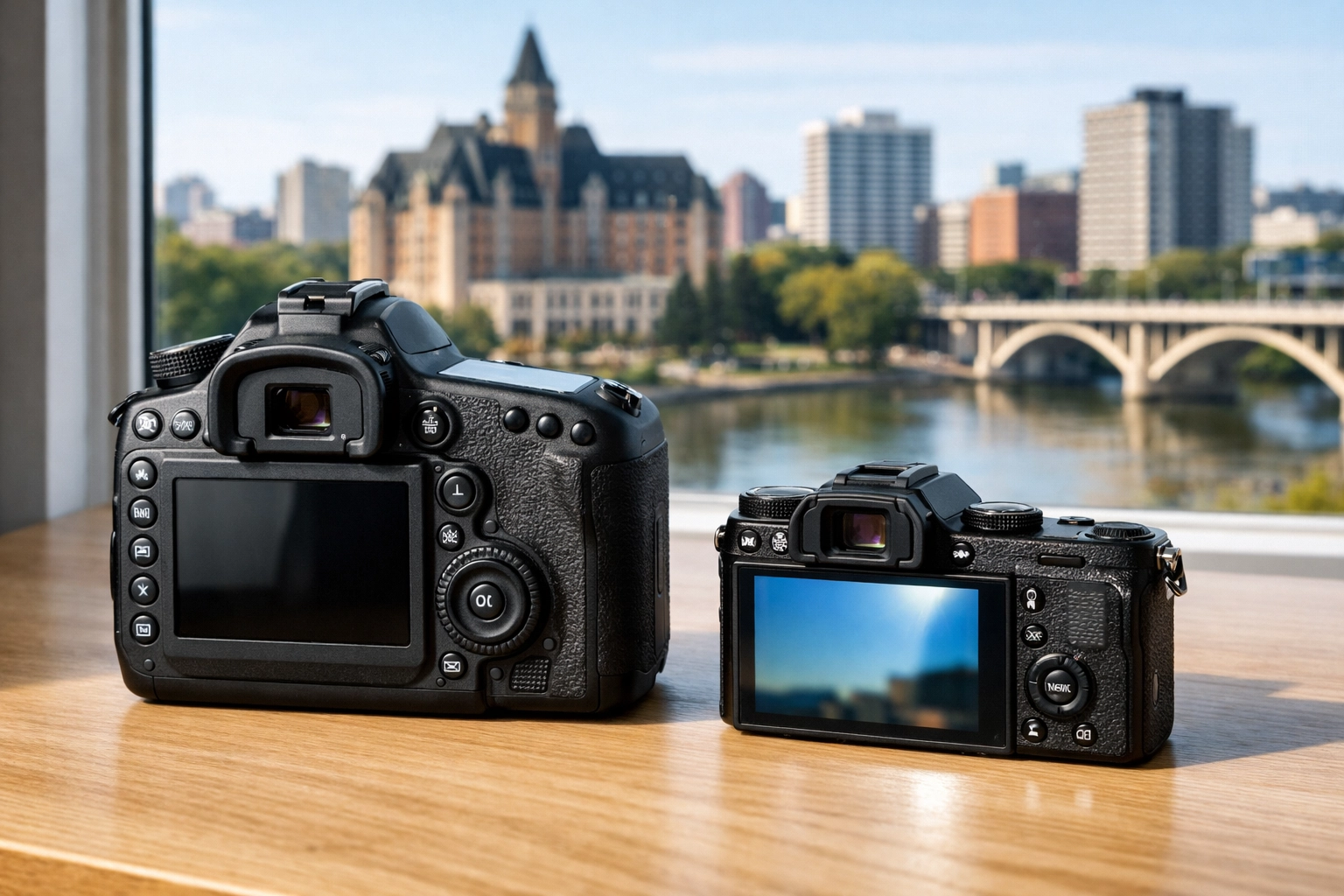
Don’t Toss Your Lenses Just Yet!
One of the biggest fears we hear at the Saskatoon Photography Club is the cost of replacing glass. "I have thousands invested in my Nikon F-mount or Canon EF lenses," is a common refrain.
Here is the good news: You don't need to buy all new lenses.
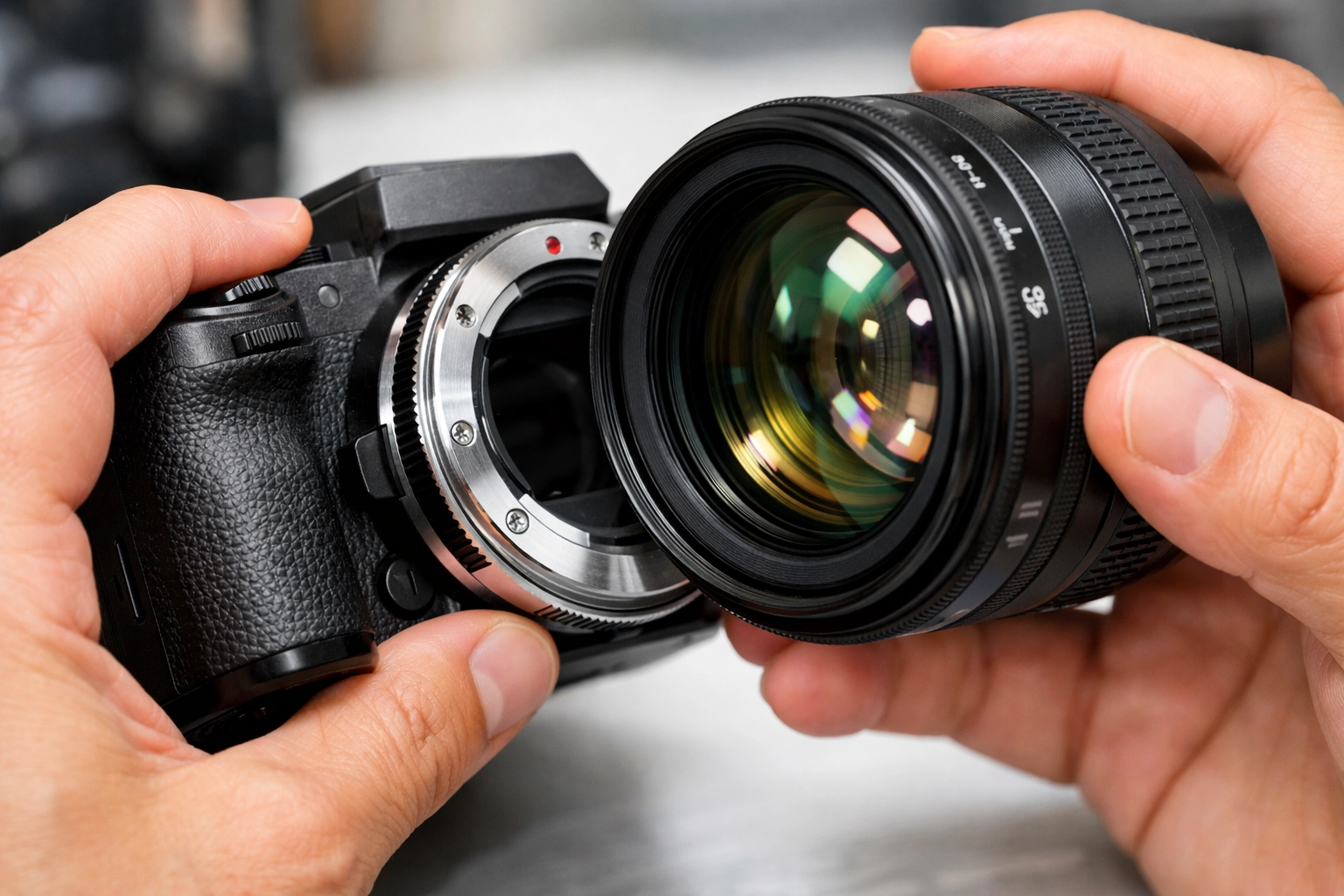
In 2026, lens adapters (like the Nikon FTZ II or the Canon Mount Adapter EF-EOS R) are incredibly sophisticated. In many cases, your old DSLR lenses will actually perform better on a mirrorless body because the camera's focus system is more precise. You can keep your favorite 70-200mm workhorse and just swap the body. This is the most cost-effective way to enter the ecosystem.
Eventually, you’ll want to move toward "native" mirrorless glass to take full advantage of the speed and compact size, but there is absolutely no rush.
Shopping Locally: Trade-ins and Advice
We are big fans of supporting our local community. If you’re looking to touch and feel the new gear before committing, Saskatoon has some great options.
Don’s Photo
Located on 8th Street, Don’s Photo has been a staple for our club members for years. They are experts at handling trade-ins. If you’re looking to move from a DSLR to a mirrorless setup, bring your old kit in for an appraisal. They often have a great selection of used mirrorless gear too, which is perfect if you’re looking to save a few bucks.
London Drugs
Whether you're at the Lawson Heights or 8th Street location, London Drugs maintains a solid photography department. They frequently run sales that coincide with national promotions, and their staff are generally very helpful with the "newbie" mirrorless questions.
Pro Tip: Before you head out to buy, check out our photo reviews or chat with fellow members at our next meeting. Seeing what other locals are using in our specific light and climate is invaluable.
The "Saskatoon Factor": Weather and Batteries
We can’t talk about gear in Saskatchewan without talking about the cold. It’s currently late February, and we all know that -30°C is always a possibility.
In the early days of mirrorless, battery life was a major concern, especially in the cold. Because mirrorless cameras use an electronic viewfinder (EVF) and a rear screen constantly, they gulp power faster than a DSLR.
In 2026, this has improved significantly, but you still need a plan:
- Spare Batteries are Mandatory: Always keep a spare battery in an inside pocket close to your body heat.
- USB-C Charging: Most 2026 mirrorless cameras allow for charging via power banks. This is a game-changer for long winter shoots.
- EVF Management: Use the "sensor only" mode to save power when you aren't actively shooting.
If you’re worried about how your new gear will handle a frosty morning at the Broadway Bridge, come chat with us! We have members who shoot in every condition imaginable. You can check our calendar-list for upcoming outings where you can see this gear in action.
Making the Transition Affordable
If you’re looking at the price tags of the latest flagship models and feeling some sticker shock, remember that the camera body provides the most immediate value upgrade.
You don't need the $6,000 professional flagship to see a massive difference. Mid-range mirrorless cameras in 2026 are hovering around the $1,500–$2,500 mark and offer features that were "pro-only" just a few years ago.
Our recommended strategy:
- Buy a mid-range mirrorless body (like a Sony A7 IV, Nikon Z6 III, or Canon R6 Mark III equivalent).
- Buy the manufacturer’s lens adapter.
- Keep using your DSLR lenses.
- Gradually sell your DSLR lenses one by one as you can afford the native mirrorless versions.

Join the Conversation
Transitioning to a new system can be intimidating. "Which menu system is better?" "Is the electronic viewfinder going to hurt my eyes?" "Does the eye-autofocus work on my cat?"
These are exactly the kinds of things we discuss at the Saskatoon Photography Club. We are a community of enthusiasts ranging from absolute beginners to seasoned pros. We love talking shop, but more importantly, we love helping each other take better photos.
If you’re looking for more inspiration, have a look at our member gallery. You’ll see a mix of DSLR and mirrorless shots, and honestly, in the hands of a skilled photographer, both look amazing. But if you want to make the technical side of things a little easier, mirrorless is the way to go.
Also, be sure to check out our latest Newsletter for March 2026 for more local tips and upcoming event details.

Final Thoughts: Is It Time?
So, should you upgrade in 2026?
Yes, if:
• Your current DSLR is struggling with focus or low light.
• You want to get more serious about video.
• You’re tired of carrying a heavy bag.
• You want to "future-proof" your kit before DSLR resale values drop even further.
Maybe wait if:
• Your current gear does everything you need it to do.
• You primarily shoot in studio environments where manual focus or slower AF isn't a dealbreaker.
• You just bought a top-tier DSLR (like a D850 or 5D IV) recently and it’s still serving you well.
At the end of the day, a camera is just a tool. Whether it has a mirror or not, the most important part of the equation is the person standing behind the lens.
If you want to learn more about our club or find out how you can get involved in our next treasure hunt, head over to our main site at saskatoonphotographyclub.com. We’d love to see you (and your camera, whatever it is) at our next meeting!
Happy shooting, Saskatoon!
: Scott Prokop
Admin, Saskatoon Photography Club