

SEO title: How to Capture Stunning Winter Photos in Saskatchewan
Meta description: Learn how to expose snowy scenes, use winter light and keep your camera working on a Saskatchewan photo outing.
URL slug: /photography-tips/winter-photography-saskatchewan/
Introduction
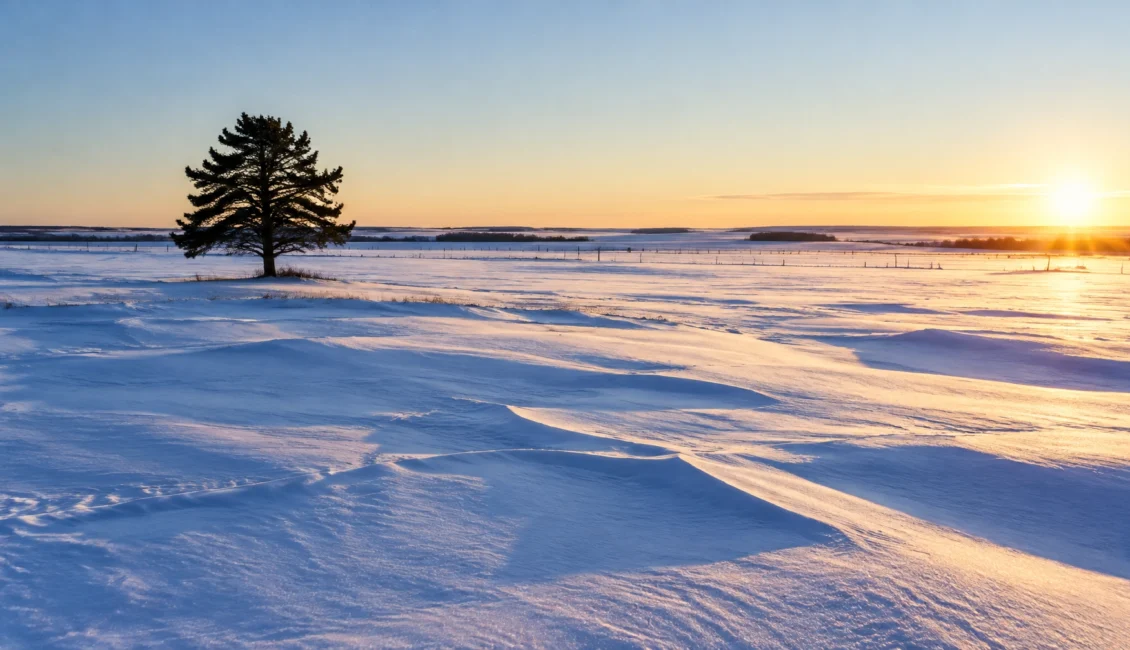
Winter gives you a fresh way to see familiar places. A fence becomes a strong line across the snow; one tree can anchor a wide prairie view; and low sunlight brings out the shapes in a drift. Even a frosty branch can make a compelling subject.
The challenge? Snow can fool your camera’s meter, and cold fingers can make a short outing feel long. With a few simple techniques and a little planning, you can make bright, detailed winter photos and enjoy the process.
Technique Explanation
Start with exposure. Your camera’s light meter tries to make a scene’s average brightness look like middle grey. A frame filled with bright snow can fool it into underexposing the image, leaving the snow dull or grey. Try exposure compensation of about +1 stop as a starting point. In bright sun or a scene mostly filled with snow, you may need as much as +2 stops.
Check the histogram: the graph showing the distribution of tones in your image. In a snowy scene, its main peak should sit toward the right, but not be cut off at the edge. That way, your snow looks bright while retaining texture and detail. If your camera allows it, shoot RAW for more flexibility when adjusting highlights later. RAW files aren’t a substitute for correct exposure, so still watch for clipped highlights.

Choose a shutter speed for the effect you want. To freeze falling or blowing snow, try around 1/500 to 1/1000 second. For softer snow streaks, slow down to roughly 1/60 to 1/125 second. A darker background can help those streaks show up. If you’re following a moving subject, gently pan with it as you shoot.
Winter light can work in your favour. The sun stays low, stretching out the golden light and long shadows. Midday sun on snow may look harsh, so try early morning or late afternoon. Blue hour, the period after sunset, can give snow a cool blue cast and soft-looking shadows.
Composition gets simpler, too. Snow clears visual clutter and creates generous negative space. Try placing one dark shape, such as a lone tree, fence post or person in a bright jacket, against the open white. The contrast helps your subject stand out.
Practical Steps
Before you head out, choose one or two subjects instead of planning to photograph everything. Saskatchewan winter offers plenty to notice: hoarfrost on branches, ice bubbles in puddles, snow-dusted prairie fences, steam rising from vents, or low sun grazing the surface of a drift. Look for small details as well as wide landscapes.
Then prepare for the conditions:
- Keep spare batteries in an inside pocket. Cold can drain them quickly; warm them in your pocket before swapping.
- Wear thin gloves you can operate your camera in, with mittens over top for warmth between shots. A hand warmer can help, too.
- Avoid changing lenses outdoors in blowing snow. Brush snow off your camera before going inside.
- Prevent condensation. Before entering a warm building, seal your camera in a ziplock bag or camera bag while you’re still outside. Let it warm slowly for 30 to 45 minutes before opening the bag. This helps keep moisture from forming on the camera and lens.


Try This
On the next clear, bright winter day, choose one simple subject: a fence post, a lone tree or a person in a colourful jacket.
- Take 10 frames, bracketing your exposure from +0.7 to +2. Compare the histograms and choose the brightest frame that still holds detail in the snow.
- If snow is falling, photograph the same scene at 1/1000 second to freeze the flakes, then at 1/80 second to create streaks. Compare the results and decide which feeling you prefer.
Don’t worry about finding a perfect scene. The exercise is about noticing how exposure and shutter speed change what you capture.
Final Tip
Your camera will handle the cold better than you will. Plan short outings with a clear subject in mind, and go out again another day. Two focused 20-minute shoots beat one miserable two-hour one.
Call to Action
Bring your winter frames to a club Photo Review or explore the winter competition guidelines and current calendar. Newcomers are welcome at our selected Tuesday meetings, September to April, at McClure United Church, 4025 Taylor Street East. Doors open at 6:30 p.m.; meetings typically run from 7 to 9 p.m. Plan your first visit.
If you’re looking for a photography club in Saskatoon (a camera club, photography group, or welcoming place to build skills beyond photography classes and workshops) we’d be happy to see you.